The First Response Early Result test, known in trying-to-conceive communities as FRER, is one of the most sensitive over-the-counter pregnancy tests sold in the US. Its published analytical sensitivity of 6.3 mIU/mL sits well below the 25 mIU/mL threshold of most other strip tests, which is why it’s a common choice during the two-week wait when hCG levels are still very low. This guide covers how the test works, how to read the result window, what the early-testing accuracy figures mean day by day, and what a faint pink line on FRER tells you.
Everything here is referenced to the manufacturer’s published instructions or peer-reviewed research. No advice is given about your own result. This post is part of the waiting and testing stage of the journey here.
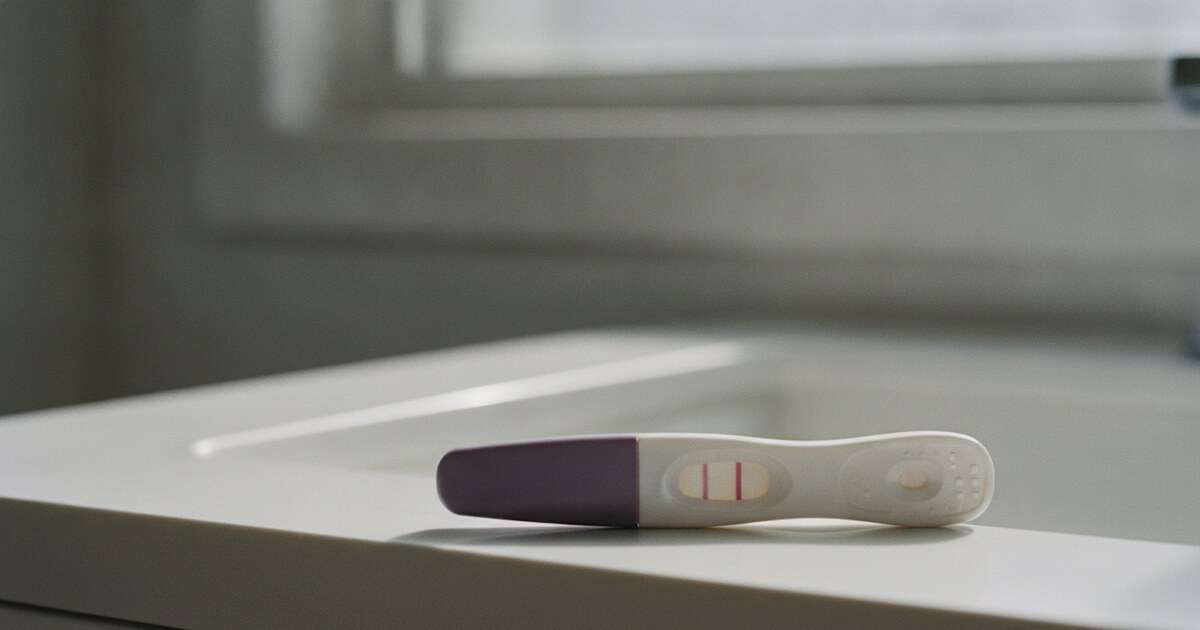
The First Response Early Result test shows results in a single window: two pink lines mean pregnant, one line means not pregnant. Any visible pink on the test line is a positive, even if it looks faint. The manufacturer’s instructions state results should be read within 3 minutes; don’t read a negative after 10 minutes.
How the First Response Early Result Test Works
FRER detects human chorionic gonadotrophin (hCG), the hormone that starts appearing in urine after a fertilised egg implants. The test strip inside the stick is coated with hCG-binding antibodies. When you hold the absorbent tip in urine, the sample wicks up the strip; where hCG molecules are present, they bind to the antibodies and trigger a pink dye reaction in the result window. The control line always runs and shows the test performed correctly. The test line only appears if hCG was detected.
The FRER has an analytical sensitivity of 6.3 mIU/mL, per a peer-reviewed sensitivity comparison of OTC pregnancy tests, making it among the most sensitive tests available without a prescription. Most strip tests detect hCG at 25 mIU/mL or higher. According to First Response’s product page, the test detects hCG in 76% of pregnant women 5 days before an expected period, 96% four days before, and more than 99% three or more days before. From the day of a missed period, accuracy is greater than 99% in laboratory studies. The test uses pink dye: both the control and test lines appear pink, so any visible colour on the test line is hCG detection, not a smear. Results appear within 3 minutes. Negative results shouldn’t be read after 10 minutes, per the manufacturer’s instructions. First-morning urine contains the highest hCG concentration for early testing, which the manufacturer recommends.
FRER’s design puts both lines in a single large window rather than two separate windows. The control line and the test line sit in the same viewing area, which makes comparison straightforward: you’re looking for one line or two, both pink.
Pink dye is the key characteristic here. Several other test brands use blue dye, which can produce blue-tinted residue marks after drying. On a pink dye test, any coloured line that appears while the test is running will be pink; a grey or colourless shadow that turns up later is not a positive.
How to Use the First Response Early Result Test
The manufacturer’s instructions inside the box are the authoritative source for your specific lot. The general process from the First Response product page is:
- Remove the stick from its foil wrapper and pull off the overcap to expose the absorbent tip.
- Hold the absorbent tip in your urine stream for 5 seconds, pointing the tip downward.
- Replace the overcap and lay the stick flat on a clean surface.
- Wait 3 minutes, then read the result window while the test is still flat.
First-morning urine produces the most concentrated sample and is worth using if you’re testing before a missed period, as the manufacturer’s instructions note. Holding the tip for fewer than 5 seconds can mean the sample doesn’t fully saturate the strip, which may affect the result. The pink wash that sweeps across the window as the sample runs is the test running; it’s not a result and it fades as the process completes.
Some packs include two or three tests. That’s useful during the two-week wait because hCG rises quickly in early pregnancy, and a test taken a day or two later will read from a higher hCG level than the one before.
How to Read the Result Window
FRER shows results in one window. Two lines mean pregnant. One line means not pregnant. That’s the full ruleset.
The two lines are:
- Control line: the reference line that always appears to confirm the test ran correctly
- Test line: appears only when hCG is detected in the sample
If neither line appears, the test is invalid and should be repeated with a new stick.
A few points worth noting when you read the window:
- Line shade doesn’t change the result. A barely visible test line is still a second line.
- You don’t need the test line to be as dark as the control line. Any visible pink in the test line position is a positive per the manufacturer’s guidance.
- The pink wash that fills the window during testing isn’t a result. It’s the sample moving through the strip.
- Read within 3 minutes. Don’t interpret a negative after 10 minutes have passed, because dried urine can leave residue that looks like a line.
What a Faint Line on a First Response Test Means
FRER is a pink dye test. Any visible pink colour on the test line within the reading window is the dye reacting to hCG. Per First Response’s own guidance on faint lines, “if there is color on the test line, it’s time to check in with your doctor.” A faint pink line is a positive result; it’s faint because hCG was low at the time of testing, which is typical when testing a few days before a missed period.
The line you want to look for is one that has actual colour while the test is still within its reading window. A shadowy, colourless, or grey mark that appears after the 10 minutes has closed isn’t a positive. That’s an evaporation line: dried urine leaves a faint residue on the membrane, but no pink dye reaction occurred, so the mark carries no colour.
The practical difference comes down to two questions: is there visible pink, and did it appear within the reading window?
Pink dye tests like FRER make this distinction easier than blue dye tests. On a blue dye test, an evaporation line can take on a faint blue tint from the dried dye in the membrane, which makes it harder to separate from a genuine faint positive. On a pink dye test, the evap line is colourless or grey, not pink. The more detail you want on reading faint lines and telling them apart from evap lines, see our guide to faint lines on a pregnancy test and the evaporation line vs faint positive comparison.
One thing the faint line does tell you: hCG was present in the sample. A faint positive earlier in the TWW can become a darker positive a day or two later as levels continue to rise, which is why some people who test daily during the TWW track the progression of line darkness.
How Accurate Is FRER Before Your Missed Period?
The detection rates published by First Response for the Early Result test:
| Days before expected period | Detection rate |
|---|---|
| 5 days before | 76% |
| 4 days before | 96% |
| 3 days before | more than 99% |
| Day of expected period | more than 99% |
These figures come from laboratory studies with controlled conditions. Real-life results can vary based on when ovulation actually occurred relative to the expected date, how diluted the urine sample is, and whether first-morning urine was used.
What the 76% figure means practically: testing 5 days before a missed period means roughly 1 in 4 pregnant people would still get a negative at that point. The test isn’t failing; hCG simply hasn’t risen to 6.3 mIU/mL yet. The accuracy chart is a reflection of where hCG levels typically are at each point in early pregnancy, not a reliability rating of the test itself.
hCG rises quickly in early pregnancy, which is why a negative result before a missed period doesn’t rule out pregnancy. The manufacturer’s instructions state that if you test early and get a negative result but your period doesn’t arrive, you should test again after your expected period date. The NHS notes that testing too early is the most common reason for a false negative result on any pregnancy test.
A negative on or after the day of your expected period carries far more weight than a negative taken several days before. From that day onward, FRER’s accuracy in laboratory conditions is greater than 99%.
If you want to plan the best testing window for your cycle, the When to Test Calculator estimates your optimal test date from your last period and cycle length.
Using Pregnancy Test Checker + With a FRER
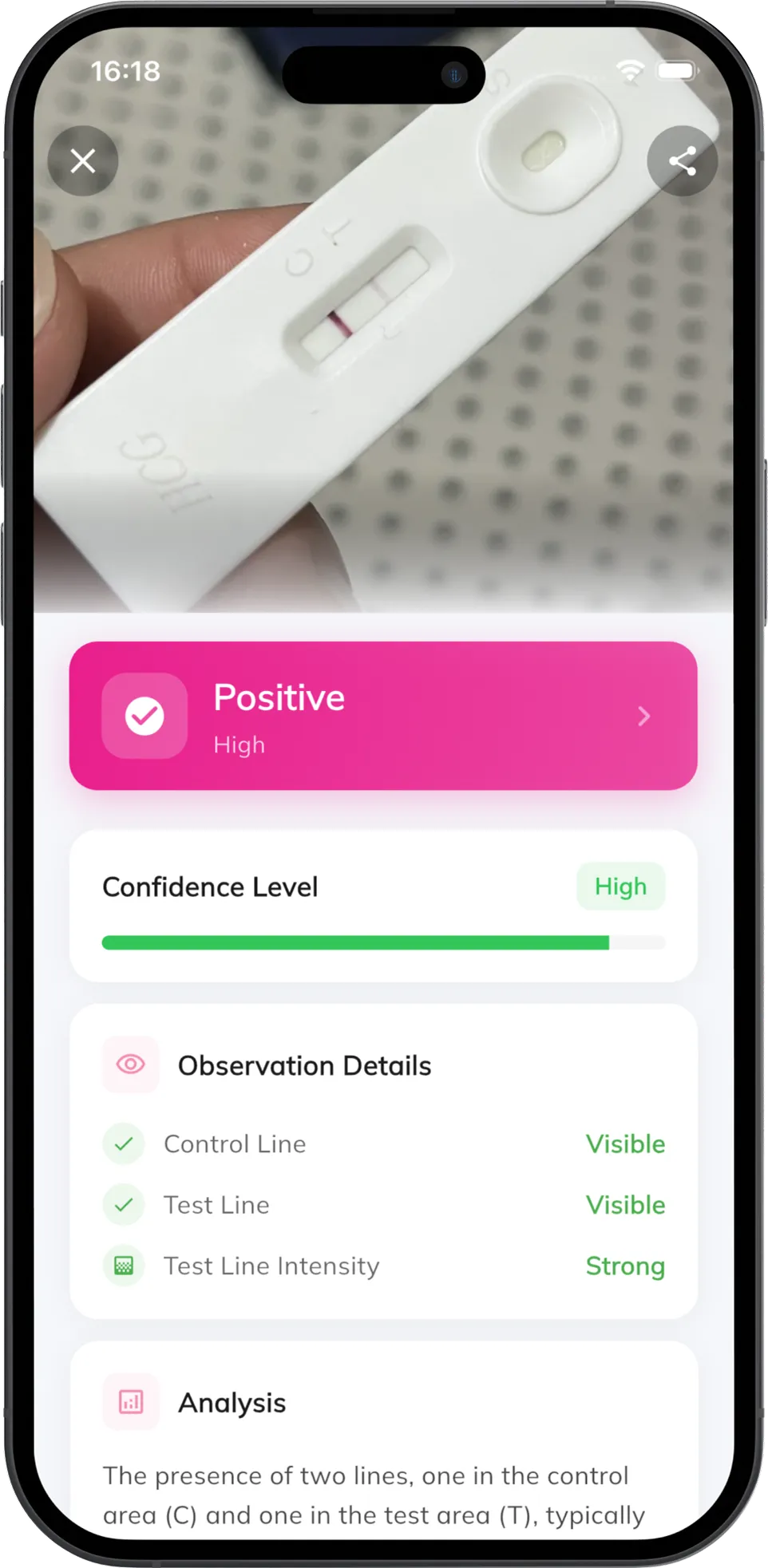
Pregnancy Test Checker + is built for the moments during the TWW when a FRER line is hard to call. You photograph the stick, and the AI scanner returns a confidence-scored result in seconds. Faint-line detection is the core feature, and it supports more than 11 brands including First Response.
The test history log keeps a dated record of every scan. For people testing across several days, seeing the confidence score alongside a progression of photographs is more informative than relying on memory of what each stick looked like at the time.
The app is an estimation tool, not a diagnostic one. It doesn’t confirm pregnancy, doesn’t measure hCG, and doesn’t replace the provider conversation that follows any positive result. All analysis stays on your device; nothing is uploaded or shared.
Frequently Asked Questions
How early can you take a First Response Early Result test?
Per the First Response product page, the FRER can detect hCG up to 6 days before a missed period. Detection accuracy at that point is 76%, meaning roughly 1 in 4 pregnant people would still get a negative. Accuracy rises to more than 99% from 3 days before a missed period.
What do two lines mean on a First Response test?
Two lines in the result window mean a positive result, regardless of how faint the second line is. The control line should always appear to confirm the test ran correctly. The test line only appears when hCG is detected. Any visible pink on the test line counts as a second line.
Does a faint line on a First Response test mean positive?
Yes, if the line has any pink colour within the 3-minute reading window. Per First Response, any colour on the test line indicates hCG was detected. A colorless or grey mark that appears after the reading window closes is an evaporation line, not a positive.
How sensitive is the First Response Early Result test?
The FRER has an analytical sensitivity of 6.3 mIU/mL, per a peer-reviewed sensitivity study. Most OTC strip tests detect at 25 mIU/mL or higher. The lower the threshold, the earlier a positive can appear during the two-week wait.
What if my First Response test is negative before my missed period?
A negative before a missed period can be a false negative if hCG hasn’t risen to a detectable level yet. The NHS notes that testing too early is the most common reason for a false negative. Per the manufacturer’s instructions, if your period doesn’t arrive after a negative early result, testing again after the expected period date gives a more reliable read.
If you’re reading a FRER during the TWW and want a second opinion on a faint line, Pregnancy Test Checker + scans the photo and returns a confidence-scored result estimate in seconds. All data stays on your device.
Sources
- First Response, Early Result Pregnancy Test, product page: https://www.firstresponse.com/en/product-listings/early-result-pregnancy-test
- First Response, “Accuracy and knowing sooner”: https://www.firstresponse.com/en/articles-listings/accuracy-and-knowing-sooner
- First Response, “Faint line on a pregnancy test”: https://www.firstresponse.com/en/articles-listings/faint-line-on-pregnancy-test
- Cole LA et al., sensitivity comparison of OTC pregnancy tests (PubMed 16295647): https://pubmed.ncbi.nlm.nih.gov/16295647/
- NHS, “Doing a pregnancy test”: https://www.nhs.uk/pregnancy/trying-for-a-baby/doing-a-pregnancy-test/