When to take a pregnancy test calculator
From your ovulation date (or last period and cycle length) it shows the implantation window, the earliest day a home test could possibly turn positive, the most reliable day to test, and what day past ovulation you are on today.
Updated October 4, 2026. Sources listed below.
Nothing you enter leaves this page. The result is an estimate for information only, not medical advice.
How the dates are worked out
Everything is counted from ovulation. A home pregnancy test detects human chorionic gonadotropin (hCG), a hormone the embryo starts producing once it has implanted in the uterus. So the earliest meaningful test date depends on when implantation can happen, and on how quickly hCG then rises to the level a test can detect.
The timing comes from a study that measured hormones daily in women trying to conceive and dated implantation from the first appearance of hCG. Implantation occurred 6 to 12 days after ovulation, and in 84 percent of pregnancies it fell on days 8, 9 or 10. That is the window the calculator shows. From there, hCG roughly doubles every two days, which is why a test on day 10 is a long shot, day 12 is reasonable, and the day of the expected period, about day 14, is where most tests become reliable. Laboratory testing of over-the-counter tests has also found their real sensitivity varies by brand, another reason an early negative proves little.
What it cannot tell you
It cannot tell you whether you are pregnant, and it cannot interpret a result. It gives you dates. If you entered a last-period date instead of a confirmed ovulation date, every number carries that estimate's uncertainty. For anything about your own result or health, your provider is the right person to ask.
Sources
Frequently asked questions
When is the earliest a pregnancy test can turn positive?
Not before implantation, because the hormone home tests detect (hCG) is only produced once the embryo has implanted. In the Wilcox study that timed implantation by hormone measurements, implantation happened 6 to 12 days after ovulation, most often on days 8 to 10. A sensitive test can pick up hCG a day or two after that, which is why the calculator marks about 10 days past ovulation as the earliest a positive is possible, and later as more likely.
Why does the calculator say to wait for the expected period?
Because hCG roughly doubles every couple of days in early pregnancy, each day of waiting makes a positive more likely and a false negative less likely. The NHS advises that most tests can be used from the first day of a missed period, with some sensitive tests usable a few days before. A negative test taken early does not rule anything out; the calculator suggests a retest date for that reason.
What is a BFP calculator?
BFP is community shorthand for "big fat positive". A BFP calculator is just a when-to-test calculator: it works out the dates from your ovulation day so you know when a test is worth taking. This one does the same thing without promising a result.
I do not know my ovulation date. Can I still use it?
Yes. Enter the first day of your last period and your cycle length instead, and the calculator estimates ovulation as 14 days before your next expected period. It is a rougher starting point than a confirmed ovulation date from OPK strips or a temperature shift.
Get Pregnancy Test Checker
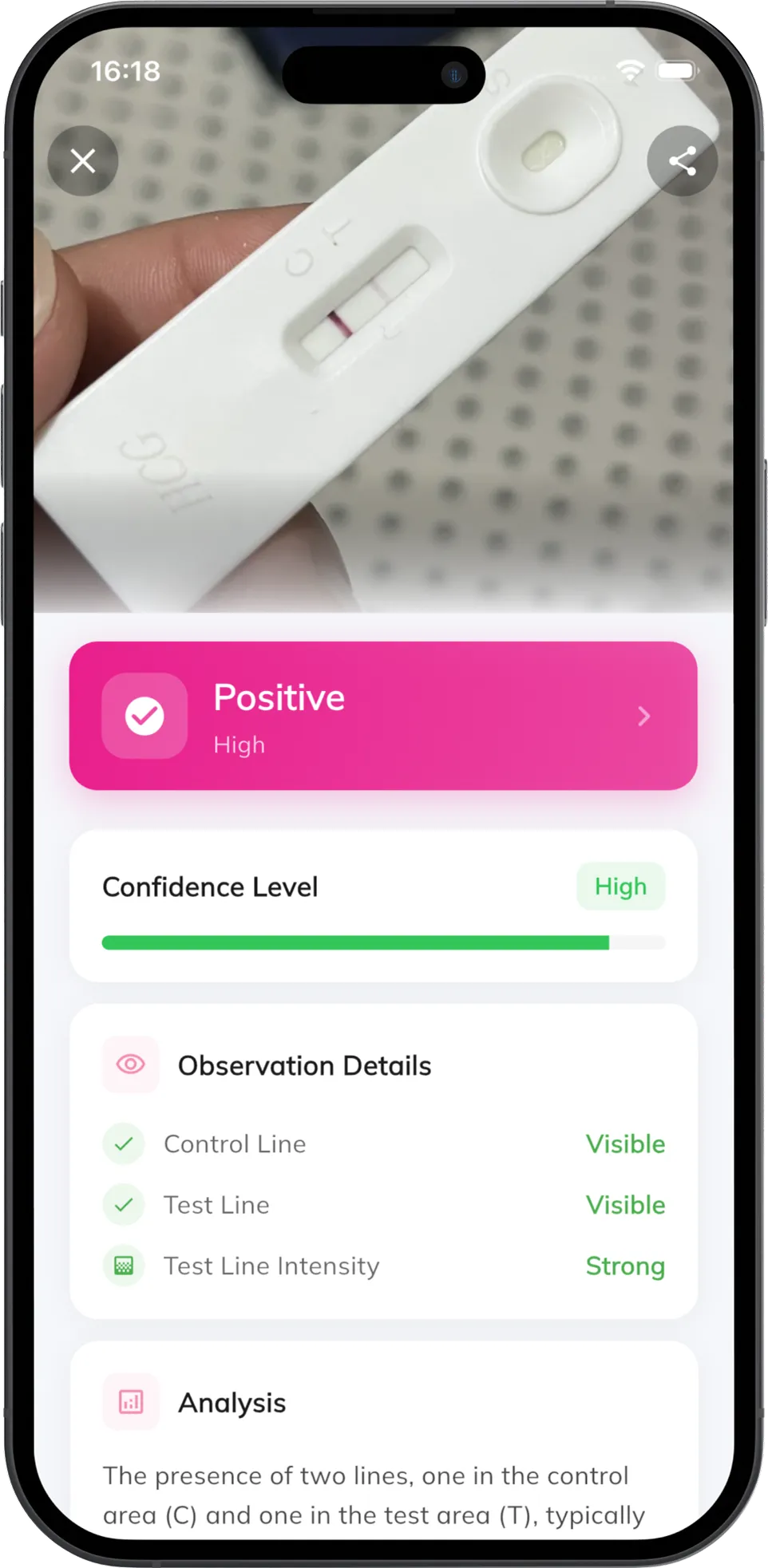
When test day comes, Pregnancy Test Checker reads a photo of the strip and flags faint lines with a confidence score. It never replaces a provider's confirmation.