The moment a digital pregnancy test shows “Not Pregnant” in clear text, there’s no line to squint at, no evaporation line to worry about, and no ambiguity about whether two lines are really there. But the flip side is that digital tests feel more absolute, and the extra displays like “1-2 weeks” can raise new questions. This guide explains how a digital pregnancy test works, what the internal reader actually does, and what those week estimates on the Clearblue Weeks Indicator mean.
Everything here is referenced to manufacturer instructions or the NHS. No advice is given about your own result. This post belongs to the waiting and testing stage of the journey here.
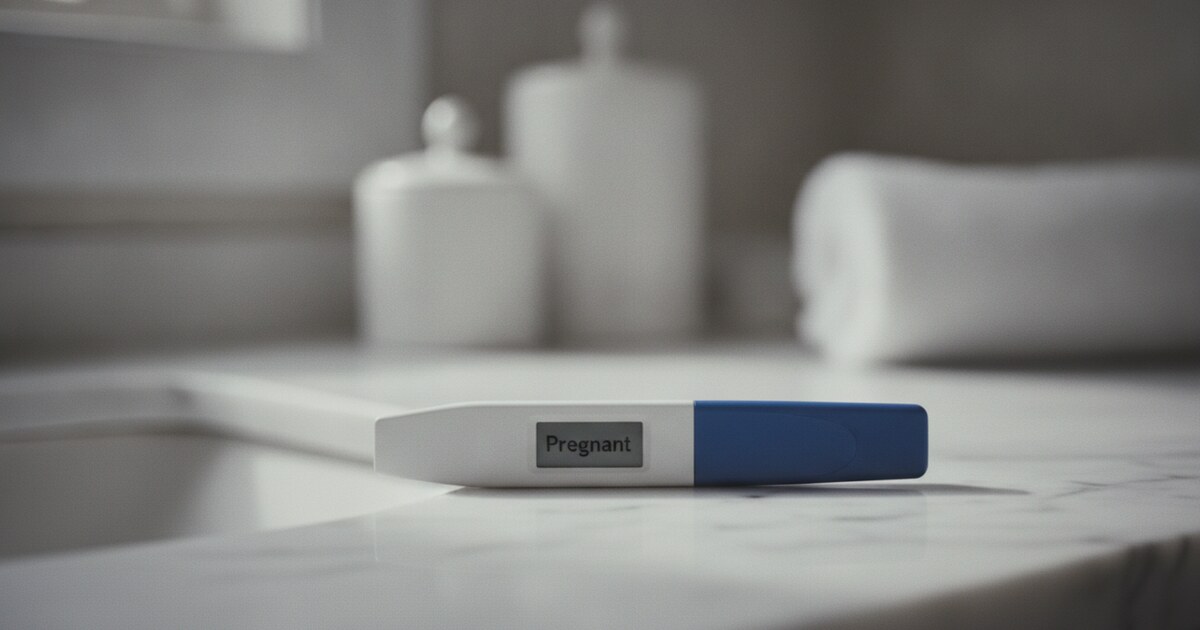
A digital pregnancy test detects hCG in urine and shows the result as “Pregnant” or “Not Pregnant” on a built-in screen. An internal reader scans the same kind of strip used in line tests, applies a fixed hCG threshold, and converts the signal to words. Because the cutoff is binary, there’s no faint line and no evaporation line.
How a Digital Pregnancy Test Reads the Strip
All pregnancy tests, digital and strip, detect hCG (human chorionic gonadotrophin). According to the NHS, hCG starts appearing in urine after the embryo implants, and levels roughly double every 24 to 48 hours in early pregnancy. The test strip inside a digital test works the same way a strip test does: antibodies bind to hCG in the urine sample, causing a colour reaction. An internal optical reader then measures that reaction’s signal strength and applies a manufacturer-programmed threshold. If the signal crosses the threshold, the screen shows “Pregnant”; below it, “Not Pregnant.” No ambiguous mid-level result is possible.
Clearblue’s early digital model detected pregnancy in 77% of urine samples taken 5 days before an expected period, 93% at 4 days before, 98% at 3 days before, and more than 99% from the day of the expected period, per Clearblue’s Early Digital instructions. These figures come from controlled lab conditions; real-life results can vary with cycle length, ovulation timing, and whether first-morning urine was used. The result typically remains on screen for approximately 24 hours on Clearblue digital models, per Clearblue’s FAQ, after which the display may fade. Photographing the screen inside the reading window gives you a permanent record.
The main practical effect of the reader is that it removes subjectivity. A strip test lets you see the raw dye reaction, so you have to decide whether a colour is real or imagined. The reader decides. For anyone who finds strip test interpretation stressful during a TWW, a digital test removes that moment of judgment.
Why Digital Pregnancy Tests Don’t Show Faint Lines
Strip tests expose the reaction membrane so you can see every shade of colour the dye produces. Digital tests hide that membrane behind the reader, which only reports one of two states. There’s no mechanism for “kind of pregnant” on the display.
This matters in a specific situation. If your hCG is above a strip test’s detection limit but below the digital reader’s threshold, a strip might show a faint positive while the digital test shows “Not Pregnant.” That doesn’t mean the strip result is wrong or the digital test is faulty. It means the digital reader needs a stronger signal before it displays “Pregnant.” Testing 1 to 2 days before a missed period is when this gap is most likely to appear. For more on interpreting strip test results, see our guides on faint lines on a pregnancy test and the difference between a faint positive and an evaporation line.
Evaporation lines can’t form on a digital test’s display. An evap line appears when dried urine leaves a mark on a strip test membrane after the reading window has closed. The digital reader captures the signal while the test is running, so dried residue has no effect on what the screen shows. If you’ve ever fished a strip test out of the bin hours later and seen a faint second line, a digital test removes that confusion entirely.
What “Pregnant 1-2 Weeks” Actually Means
Some digital tests do more than confirm pregnancy. The Clearblue Pregnancy Test with Weeks Indicator adds a second reading alongside “Pregnant”: 1-2, 2-3, or 3+. These numbers refer to weeks since conception, not the gestational weeks your provider uses, which are counted from your last menstrual period and run about 2 weeks longer. So a “1-2” reading corresponds roughly to 3 to 4 gestational weeks.
The test achieves this estimate by running two hCG measurements on the same strip. One strip is highly sensitive and responds to low hCG concentrations typical of the earliest days after a positive. A second strip with lower sensitivity responds only to higher hCG concentrations typical of a later stage. Clearblue’s published accuracy study on the Weeks Indicator states that a urine hCG concentration of at least 153 mIU/mL is needed to trigger the 2-3 reading. Clearblue reports the weeks estimate as 93% accurate overall; the pregnant/not pregnant result remains more than 99% accurate from the day of the expected period.
A few things the weeks reading can’t tell you: it doesn’t confirm a healthy pregnancy, doesn’t give a due date, and isn’t a substitute for an ultrasound dating scan. The estimate is also one snapshot of hCG in one urine sample, so time of day, hydration, and where you are in the doubling cycle all affect it. If the weeks display surprises you, your midwife or doctor is the right person to interpret it against your cycle history.
Digital Tests vs Strip Tests: Sensitivity and Early Testing
Strip tests and digital tests use the same underlying chemistry, but they’re calibrated differently. Highly sensitive strip tests can detect hCG at concentrations around 10 to 20 mIU/mL. Many digital tests are calibrated to a 20 to 25 mIU/mL threshold, according to sensitivity data published in product instructions. That gap can matter in the 1 to 2 days before a period is due, when hCG is rising but still low.
The most common pattern for people tracking a cycle closely is to use sensitive strips during the two-week wait because they’re cheaper for daily testing and can pick up a positive a little earlier, then use a digital test to confirm once a strip positive appears. At that point, both types are consistently reliable. The NHS notes that most pregnancy tests are more than 99% accurate from the day of a missed period.
One practical choice: if you’ve had a clear strip positive and want a “Pregnant” display for a photo or to share with a partner, a digital test is the clearest way to get it. If you’re deep in the early days of the TWW and want the most sensitive option, a low-threshold strip test gives you that. The two formats aren’t competing; they serve different moments in the same process.
If you’re unsure when your best testing window falls, the When to Test Calculator estimates your optimal test date from your last period and cycle length. It doesn’t interpret a result; it helps you choose the right day so that “Not Pregnant” actually means something.
Tracking Your Strip Tests with Pregnancy Test Checker
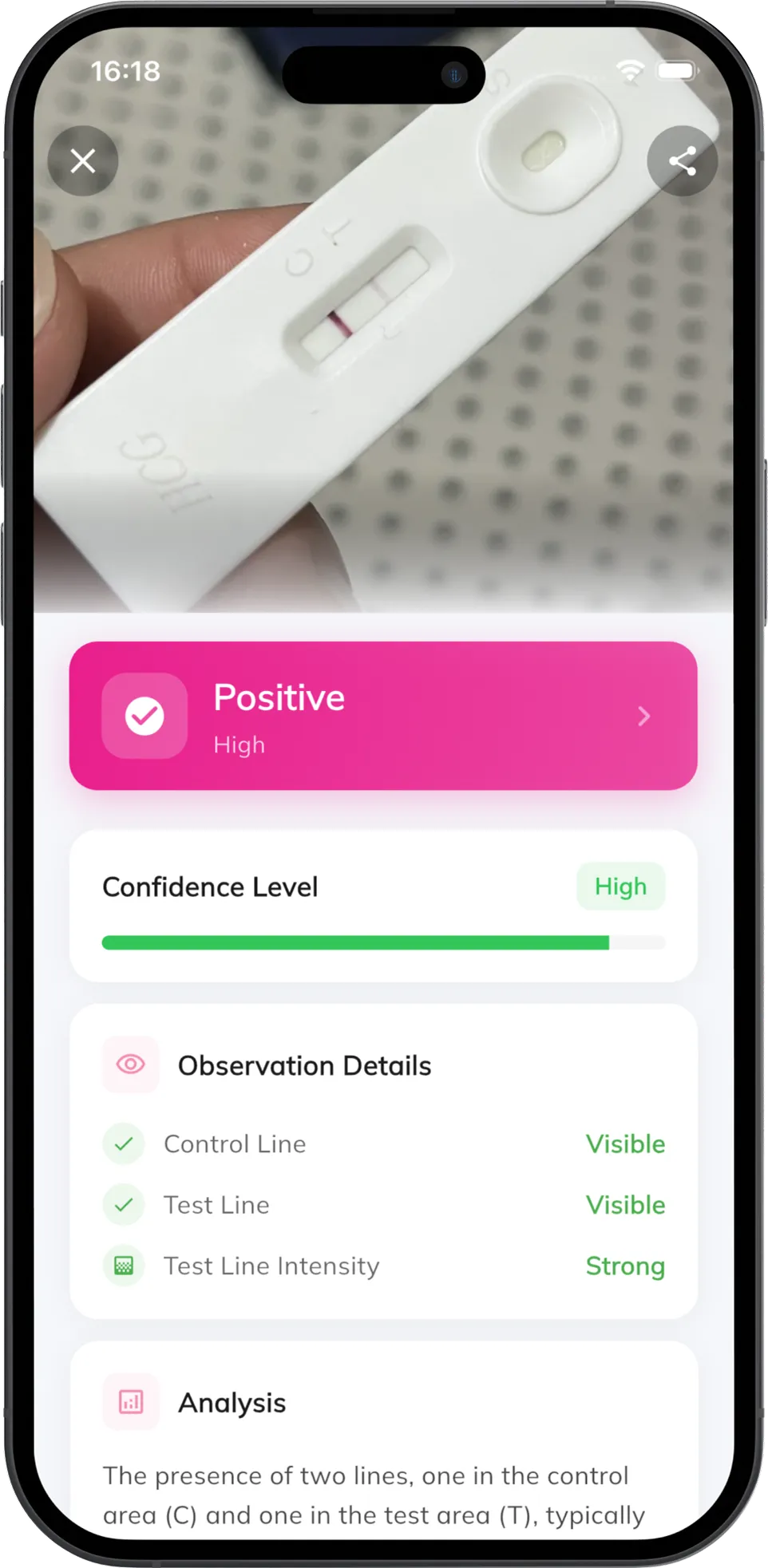
Pregnancy Test Checker + is built for the moments during the TWW when strip test lines are hardest to read. You photograph the strip and the AI scanner returns a confidence-scored result estimate in seconds. Faint-line detection is the core feature, which is most useful during the early days of the TWW when hCG is low and lines are at their lightest. It supports more than 11 brands, including Clearblue and First Response.
The test history feature keeps a log of every scan in order. For people testing across several days, seeing a progression of line darkness over time is clearer than relying on memory of how each stick looked. All data stays on the device; nothing is shared.
The app describes itself as an estimation tool for general information. It doesn’t confirm pregnancy, doesn’t measure hCG levels, and isn’t a replacement for the provider conversation that follows a positive result. If you’ve been using strips during the TWW and want a clear text confirmation, a digital test is the natural next step once hCG levels are high enough to cross the digital threshold.
Frequently asked questions
Why does a strip test show a faint positive but the digital test says “Not Pregnant”?
Strip tests can detect hCG at lower concentrations than many digital readers. A faint line on a strip means hCG was present, but it may have been below the digital reader’s threshold. This is most common 1 to 2 days before a missed period. The NHS recommends retesting if your period doesn’t arrive after a negative result.
What does the “1-2 weeks” reading mean on a Clearblue digital test?
The “1-2” display refers to weeks since conception, not weeks of pregnancy counted from your last period. Per Clearblue’s published study, the weeks estimate is 93% accurate. A provider or dating scan gives a more precise measurement.
Can a digital pregnancy test give a false negative?
Yes. If your hCG level is below the reader’s threshold at the time of testing, the display will show “Not Pregnant” even if hCG is present. This is most common when testing before a missed period. The NHS advises retesting if your period doesn’t arrive. Clearblue’s instructions recommend first-morning urine for early testing because it carries the most concentrated hCG.
Is the result on a digital test permanent?
Per Clearblue’s FAQ, the result on their digital models remains visible for approximately 24 hours. After that the display may fade. Photograph the screen inside the reading window to keep a record of what it showed.
If you want a confidence-scored read of a strip test during the TWW, Pregnancy Test Checker + scans the photo and returns a result estimate in seconds. All analysis stays on your device.
Sources
- NHS, “Doing a pregnancy test”: https://www.nhs.uk/pregnancy/trying-for-a-baby/doing-a-pregnancy-test/
- Clearblue Early Digital Pregnancy Test, manufacturer instructions and early detection data: https://www.clearblue.com/pregnancy-tests/early-digital
- Clearblue Digital Pregnancy Test, product page: https://www.clearblue.com/pregnancy-tests/digital
- Clearblue, Pregnancy Test FAQ: https://www.clearblue.com/pregnancy-tests/faqs-pregnancy-tests
- Clearblue, published accuracy study on the Weeks Indicator: https://www.clearblue.com/sites/default/files/wysiwyg/hcpro/publications/HCP_Publications/Articles-Pregnancy/Accuracy_of_New_Clearblue_Digital_Pregnancy_Test_with_Conception_Indicator.pdf