The box includes a chart for calculating your start day, but making sense of the results, knowing which time of day to test, and understanding the difference between the flashing and static smiley takes a bit of unpacking. Clearblue makes more than one ovulation test type, and the timing rules differ between them.
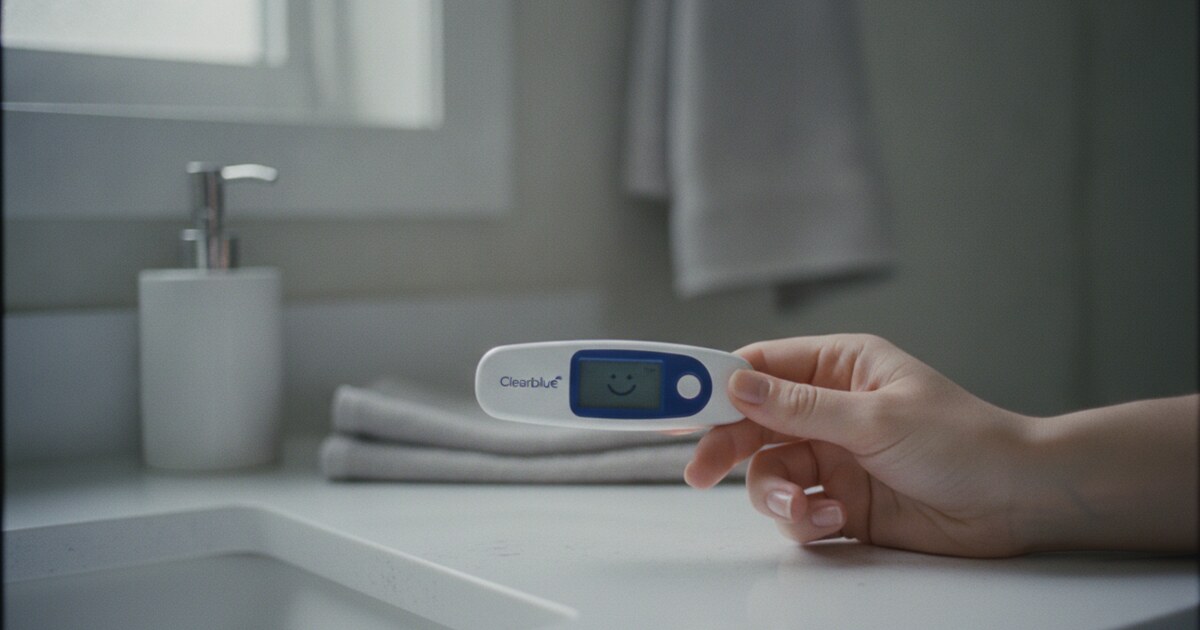
The two most commonly used are the Clearblue Advanced Digital Ovulation Test, which detects both a rise in estrogen and the LH surge, and the Clearblue Digital Ovulation Test, which detects LH only. Both display a smiley face for a positive result, but the Advanced adds a flashing smiley to flag the days of rising estrogen before the LH peak arrives. The standard Digital gives a simpler positive or negative.
This guide is part of the trying to conceive stage at Your Baby Journey. It covers how to find your start day, what each smiley result means, the best time of day to test, and what to do after a positive result.
To find your start day for a Clearblue ovulation test, locate your shortest recent cycle length in the chart inside the instruction leaflet. For the Advanced Digital test, use first morning urine and test at the same time each day. The flashing smiley means high fertility, not peak — keep testing until the static smiley appears, which signals the LH surge has been detected.
How Clearblue Ovulation Tests Work
Ovulation tests detect the LH (luteinizing hormone) surge, the hormone spike that triggers egg release. Per NHS guidance on getting pregnant, the LH surge typically precedes ovulation by 24 to 36 hours, which is why catching it gives useful advance notice for timing.
The Clearblue Advanced Digital goes a step further. It also monitors urinary estrogen (measured as estrone-3-glucuronide), which begins to rise several days before the LH surge. This two-hormone approach lets the test identify a longer window of potential fertility before the peak. The standard Clearblue Digital detects LH only and returns two possible results: a smiley for positive, a blank circle for negative.
Both tests work through the same smiley-face display. The distinction is the number of result types. The standard Digital gives two; the Advanced Digital gives three.
When to Start Your Clearblue Ovulation Test
Clearblue calculates your start day from your shortest menstrual cycle in the last six months. Per Clearblue’s product information for the Advanced Digital Ovulation Test, anchoring the start day to the shortest cycle prevents missing an early surge if your cycles vary in length. The typical LH surge arrives about 14 days before the next period, per NHS guidance on ovulation, so working backwards from your shortest cycle gives a conservative buffer. The pattern in the Clearblue start-day chart works out to approximately cycle length minus 17: a 28-day shortest cycle points to around day 11, a 32-day shortest cycle to around day 15, and a 35-day shortest cycle to around day 18. Per Clearblue’s product information, the Advanced Digital detects the LH surge in more than 99% of cycles when used correctly. For cycles shorter than 21 days, Clearblue’s instruction leaflet advises speaking with a healthcare provider before relying on a standard OPK start-day chart, since very short cycles can compress the pre-ovulatory phase significantly.
Day 1 of your cycle is the first day of full menstrual flow, not spotting. If your cycle length varies, use the shortest value you’ve seen in the past six months, not an average.
The ovulation calculator at Your Baby Journey can give you a rough estimate of your fertile window from your last period date and average cycle length before you consult the Clearblue chart. It’s a useful cross-reference when your cycle history is short and you’re not sure which shortest-cycle number to use.
What Clearblue Ovulation Test Results Mean
Clearblue Advanced Digital (detects estrogen and LH):
A blank circle means no elevated hormone has been detected yet. LH hasn’t surged and estrogen hasn’t started its pre-surge climb. This is the expected result on most days early in the testing window.
A flashing smiley means High Fertility. Estrogen is rising, which signals the LH surge is approaching, but hasn’t arrived yet. The flashing phase typically lasts one to five days, depending on the cycle. Keep testing every day at the same time. The flashing smiley is not a sign to stop testing — it’s a sign that the peak is coming.
A static (non-flashing) smiley means Peak Fertility. The LH surge has been detected. Per Clearblue’s product information, ovulation is most likely to occur within 24 to 36 hours of this reading. The test continues to show the static smiley for approximately 48 hours after the first peak result.
Clearblue Digital Ovulation Test (detects LH only):
A smiley means Peak Fertility: the LH surge has been detected. A blank circle means no surge. There’s no high-fertility flashing stage with this test.
Clearblue OPK strips:
The strip result is positive when the test line is as dark as or darker than the control line. Any lighter result is still negative, regardless of how clearly visible the test line is. The OPK faint-line guide explains why the ratio rule is different from how a pregnancy test works.
The Best Time of Day to Take a Clearblue Ovulation Test
This is one of the most common points of confusion, because the two main Clearblue digital tests have opposite recommendations.
The Clearblue Advanced Digital instruction leaflet says to use first morning urine (FMU). Testing first thing, before drinking anything, gives the most concentrated urine sample and the most reliable detection of the estrogen and LH thresholds the test is calibrated to. Dipping the test holder into a clean urine sample for 15 seconds rather than holding it in a urine stream is the method described in the Clearblue Advanced leaflet.
The standard Clearblue Digital leaflet advises against first morning urine and recommends testing between 10am and 8pm. It’s calibrated differently, and testing with concentrated morning urine can give unpredictable results with this version.
For both tests: reduce fluid intake in the two hours before testing to avoid diluting your urine sample, which can lower detectable hormone concentrations. Testing at the same time each day makes it easier to compare results consistently.
If you’re unsure which version you have, check the product name on the box. “Advanced Digital” includes the estrogen detection and needs FMU; “Digital Ovulation Test” without “Advanced” doesn’t.
What to Do After You See a Static Smiley
A static smiley means the LH surge has been detected. Per the NHS overview on how to get pregnant, this is the point at which fertility is at its peak, with ovulation most likely to follow within 24 to 36 hours.
There’s no need to continue testing after the static smiley appears. The Advanced Digital will hold the static smiley display for around 48 hours. Testing after that point, into the luteal phase, won’t give meaningful information about fertility in the current cycle.
To track days from here through the two-week wait, the DPO meaning guide explains how to count days past ovulation from a confirmed LH surge.
If You’re Not Seeing a Positive
Most people detect a surge within one to two weeks of starting on the correct day for their cycle length. A few common causes prevent a positive from appearing.
Starting too late is the most frequent reason. If your cycle ran shorter than usual, the surge may have passed before your first test day. After your next period, note the actual cycle length and adjust your start day for the following cycle.
Testing with dilute urine can suppress the detectable hormone concentration. If you’ve been drinking a lot of fluids before testing, that can lower the apparent LH level and prevent the threshold from being reached.
Cycles associated with PCOS (polycystic ovary syndrome) can produce irregular LH patterns that make standard OPK interpretation unreliable. NHS guidance on PCOS notes that irregular cycles are a central feature of the condition. If you see what appear to be multiple near-positives across several days, or no clear positive across multiple cycles, that’s worth raising with your provider rather than troubleshooting further alone.
How Ovulation Tracker Helps
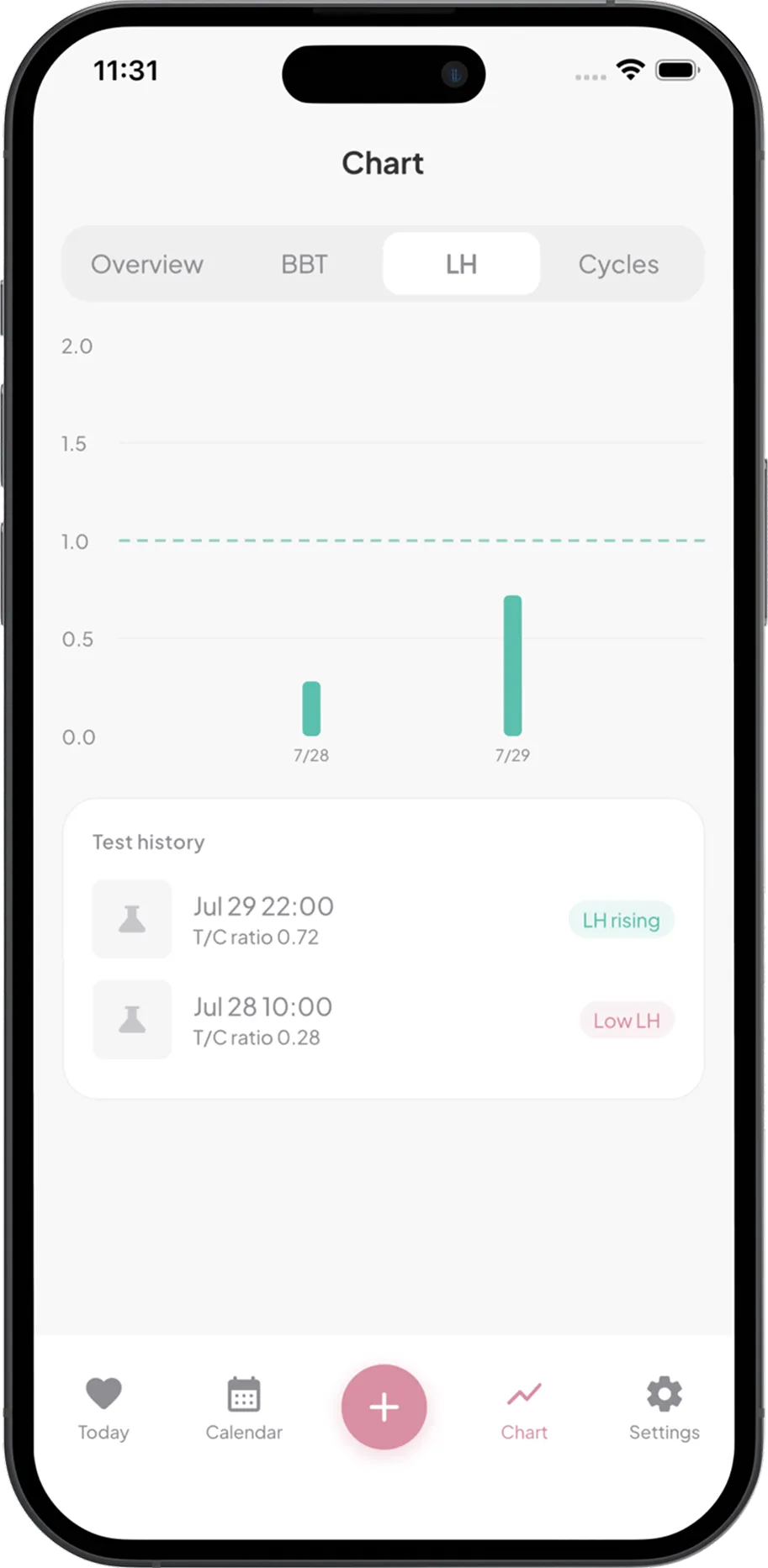
Reading a smiley result on the Clearblue Digital is straightforward, but tracking results over time and combining them with your cycle history takes more effort when you’re doing it manually. The Ovulation Tracker: PCOS Log app has a built-in OPK reader: photograph your strip, and the app analyses the test-to-control line ratio automatically.
It also logs your BBT (basal body temperature) chart. Combining an OPK positive with a BBT temperature rise in the same cycle gives a more complete picture of when ovulation occurred, which is useful for timing and for understanding your cycle patterns over months rather than days.
If your cycles are irregular, the app’s PCOS mode accounts for variable cycle lengths when logging and displaying your fertile window. Everything stays on your device, with no account required and no data uploaded externally. Find the app on the trying to conceive stage hub.
Frequently Asked Questions
When should I start using Clearblue ovulation tests?
Start on the cycle day shown in the chart in your Clearblue instruction leaflet, based on your shortest recent cycle length. For a 28-day cycle the chart typically points to around day 11; for a 35-day cycle, around day 18. Count day 1 as the first full day of menstrual flow.
What does a flashing smiley mean on Clearblue Advanced Digital?
A flashing smiley means High Fertility. Estrogen is rising ahead of the LH surge, but peak fertility hasn’t been reached yet. The flashing phase lasts one to five days. Keep testing daily until you see a static smiley, which indicates the LH surge has arrived.
What does a static smiley mean on Clearblue?
A static (non-flashing) smiley means Peak Fertility. The LH surge has been detected. Per Clearblue’s product information, ovulation is most likely to follow within 24 to 36 hours.
What time of day should I take a Clearblue ovulation test?
The Clearblue Advanced Digital leaflet recommends first morning urine. The standard Clearblue Digital leaflet advises testing between 10am and 8pm and avoiding FMU. Follow the instructions specific to the product you’re using — the two tests are calibrated differently. For both, avoid drinking heavily in the two hours before testing.
Why am I not getting a positive on my Clearblue ovulation test?
The most common cause is starting too late. If your cycle ran shorter than expected, the surge may have occurred before your first test day. Dilute urine from high fluid intake before testing can also suppress detection. For cycles associated with PCOS, LH patterns can be irregular and harder to read with standard OPKs; the faint-line OPK guide covers the PCOS OPK challenge in more detail.
Combining your Clearblue results with cycle history and BBT logging makes the data more useful over time. The Ovulation Tracker: PCOS Log app logs your OPK results alongside your BBT chart and cycle history, all on your device with no account required.
Sources
- NHS. “How to get pregnant.” https://www.nhs.uk/pregnancy/trying-for-a-baby/how-to-get-pregnant/
- Clearblue. “Advanced Digital Ovulation Test.” https://uk.clearblue.com/ovulation-tests/advanced-digital-ovulation-test
- NHS. “Polycystic ovary syndrome (PCOS).” https://www.nhs.uk/conditions/polycystic-ovary-syndrome-pcos/