Ten days past ovulation is a meaningful point in the two-week wait. hCG has had time to build in pregnancies with early or average implantation, and some tests can now detect it. Whether yours does depends on two things: when implantation happened and which test you’re using.
This article covers the biology behind 10 DPO testing, what community data says about positive and negative rates, why a 10 DPO negative isn’t always final, and how to read whatever result shows up. There are no symptom lists here.
For the previous day in this series, see 9 DPO: What a Pregnancy Test Can Show. The how many DPO can you test guide maps the full sensitivity picture across the two-week wait.
Testing at 10 DPO returns a positive for most pregnant people, but not all. Community data from Countdown to Pregnancy shows 66% of pregnant people who tested on this day got a positive, typically faint. The remaining 34% tested negative, not because the cycle had ended, but because hCG hadn’t yet crossed the test’s detection floor.
Where Implantation Stands at 10 DPO
A pregnancy test measures hCG (human chorionic gonadotropin), a hormone produced only after the embryo attaches to the uterine lining. Before that attachment, hCG is essentially absent.
A 1999 study by Wilcox, Baird and Weinberg, published in the New England Journal of Medicine, followed 221 women through 287 conception cycles and found that implantation completes between 6 and 12 DPO. About 84% of ongoing pregnancies implanted within the 8 to 10 DPO window, meaning a real portion are still completing implantation on day 10 itself or haven’t started yet. Someone who implanted at 8 DPO will have had two full doubling cycles by 10 DPO; at the typical 48 to 72 hour doubling rate cited by ACOG, hCG in that pregnancy could reach 4 to 12 mIU/mL by that point.
Someone implanting at 10 DPO has essentially zero hCG the same day. Community data from Countdown to Pregnancy, compiled from thousands of home test results submitted by confirmed pregnant people, shows 66% got a positive at 10 DPO, with faint positives being the most common result; 34% got a false negative. That gap traces directly to this spread in implantation timing, which is entirely normal and not a sign of anything wrong.
What a Test Can Actually Detect at 10 DPO
A test returns a positive only when hCG in urine crosses its detection threshold. Those thresholds differ substantially across brands.
- First Response Early Result (FRER): 6.3 mIU/mL, per the manufacturer’s instructions
- Clearblue Early Detection: approximately 10 mIU/mL
- Standard strip tests and most digital tests: 20 to 25 mIU/mL
For a test to turn positive at 10 DPO, implantation would need to have finished by around 7 to 9 DPO, giving hCG enough doubling cycles to reach at least FRER’s 6.3 mIU/mL floor. Pregnancies implanting closer to 10 DPO won’t reach that threshold the same day regardless of which test is used.
A 2014 review by Gnoth and Johnson tested the real-world sensitivity of widely available home tests and found a meaningful gap between stated and actual detection thresholds. Some early-detection tests in the review performed above their labelled sensitivity in practice, making brand choice at this stage more consequential than it might appear.
At 10 DPO, FRER with first-morning urine gives the best chance of catching hCG that has only just cleared the 6 to 10 mIU/mL range. Standard strip tests at 20 to 25 mIU/mL are likely to miss most 10 DPO pregnancies; that threshold is typically crossed between 11 and 13 DPO for average implantation timing.
Why 66% Test Positive at 10 DPO
The jump in positive rate between 9 and 10 DPO is one of the biggest single-day shifts in community data. At 9 DPO, roughly one in four pregnant people tests positive. By 10 DPO, that rises to two in three.
Two factors converge here. First, pregnancies that implanted at 8 to 9 DPO have had one to two full doubling cycles, pushing hCG from near-zero toward the 6 to 12 mIU/mL range where sensitive tests can pick it up. Second, 10 DPO sits at the outer edge of the 8 to 10 DPO implantation window, so the bulk of the pregnant group has completed implantation and has measurable hCG.
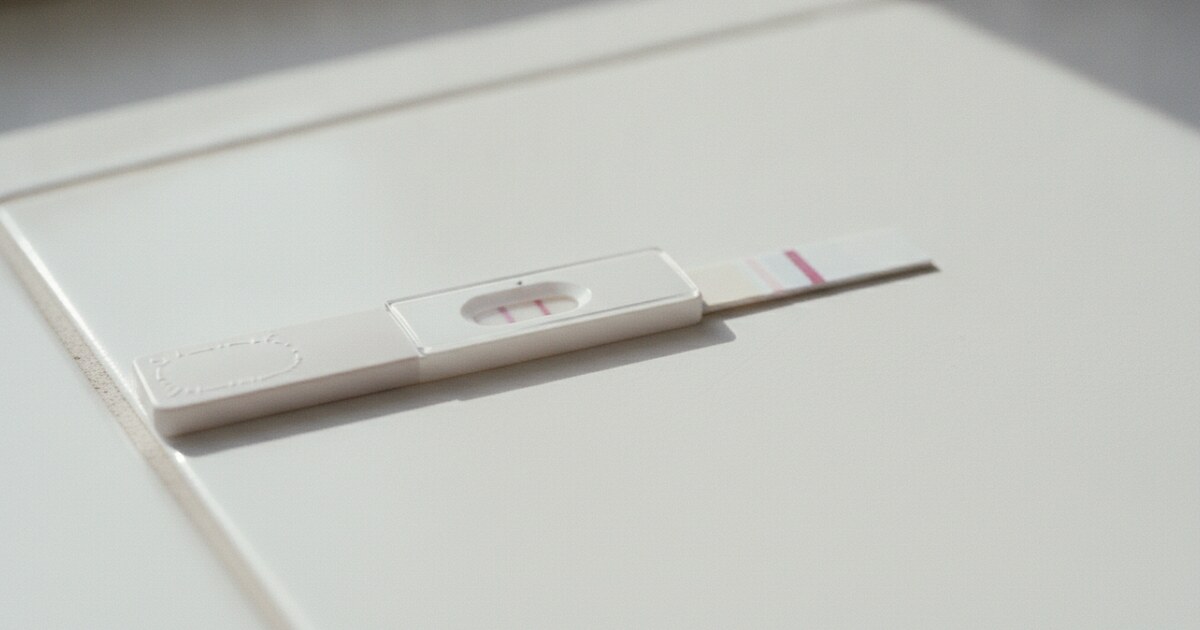
The most frequent 10 DPO positive is faint: the test line appears but doesn’t match the control line’s intensity. Per most manufacturer instructions, any visible line appearing within the reading window is a positive, regardless of how light it looks. A faint line at 10 DPO carries the same meaning as a dark one; hCG has simply just cleared the detection floor.
For help telling a genuine faint line from an evaporation artifact, the evaporation line vs faint positive guide covers both by dye type.
What a BFN at 10 DPO Actually Means
A negative at 10 DPO (a BFN, or big fat negative) accounts for 34% of results from confirmed pregnant people in the Countdown to Pregnancy dataset. One in three pregnant people who tested on day 10 got a negative.
A 10 DPO BFN typically breaks down into one of three scenarios. In the first, implantation happened at 8 to 9 DPO but hCG has had only one doubling cycle, landing below even FRER’s 6.3 mIU/mL floor (still a valid pregnancy). In the second, implantation is completing at 10 DPO or later; the embryo hasn’t started producing hCG yet. In the third, a standard-sensitivity test at 20 to 25 mIU/mL is missing a pregnancy that would already show on FRER.
Each day past 10 DPO adds at least one more doubling cycle. For most of those 34%, the test line arrives within two to four days. Countdown to Pregnancy data shows positive rates climbing steeply through 12 to 14 DPO, where they converge above 90% of confirmed pregnancies.
The NHS guidance on pregnancy testing recommends testing from the first day of a missed period for the most reliable result. Most early-detection manufacturer instructions also note that a negative before a missed period may not be final.
How to Read a 10 DPO Result
The same reading rules apply at 10 DPO that apply throughout early testing.
Read within the manufacturer’s window. Most brands specify 3 to 10 minutes. A line appearing after the window closes is likely an evaporation line and doesn’t count.
Use first-morning urine. hCG concentrates overnight and reaches its highest detectable level in morning urine. At 10 DPO, where the margin between detectable and undetectable can be a few mIU/mL, concentration matters. Most early-detection manufacturer instructions note that first-morning urine is especially important before a missed period.
Any line within the window counts. Per most manufacturer instructions, any visible line in the test area within the reading window is a positive. Intensity doesn’t change the interpretation.
If the result is negative and a period hasn’t arrived, the when-to-test calculator works out the next realistic testing window from your ovulation date. The full picture of the two-week wait is at the waiting-and-testing hub.
How Pregnancy Test Checker Helps at 10 DPO
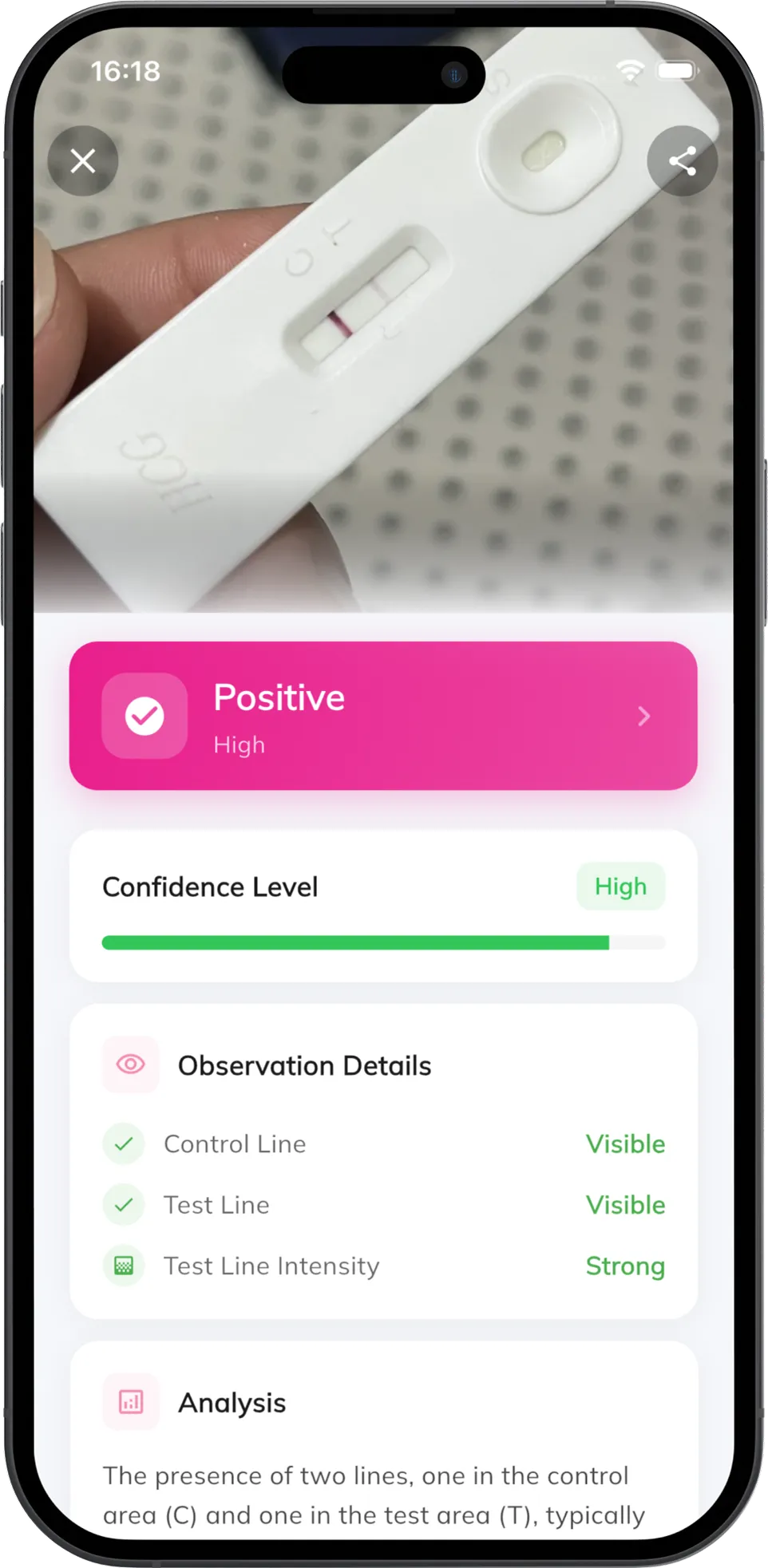
A faint 10 DPO line can be genuinely hard to read under bathroom light. Pregnancy Test Checker + scans a photo of your strip and returns a confidence score with a line-by-line read: control line, test line, pattern. It supports First Response, Clearblue, and 11+ other brands.
The app’s faint line detection is built for exactly this stage of testing. Premium access adds a full breakdown so you’re not squinting and second-guessing. All scans stay on your device; the app is informational and doesn’t confirm or diagnose a pregnancy.
Frequently Asked Questions
Can you get a positive pregnancy test at 10 DPO?
Yes. Community data from Countdown to Pregnancy shows 66% of pregnant people who tested at 10 DPO got a positive, with faint positives being the most frequent result. The remaining 34% were false negatives: hCG hadn’t yet crossed the test’s detection threshold. Sensitive tests like First Response Early Result give the best chance at this stage.
Does a negative at 10 DPO mean you’re not pregnant?
No. Around 34% of pregnant people in Countdown to Pregnancy data tested negative at 10 DPO. Implantation can complete as late as 12 DPO (Wilcox et al., 1999), and hCG rises only after that. Someone who implanted at 10 or 11 DPO won’t have detectable hCG on day 10. The NHS advises testing from the first day of a missed period for the most reliable answer.
Which pregnancy test is most sensitive at 10 DPO?
First Response Early Result, rated at 6.3 mIU/mL by the manufacturer, gives the best chance because hCG is still low in many pregnancies at 10 DPO. Clearblue Early Detection is rated at around 10 mIU/mL. Standard strip tests and digital tests at 20 to 25 mIU/mL often can’t detect the hormone until 12 to 14 DPO (Gnoth & Johnson, 2014).
I got a BFN at 10 DPO. When should I retest?
Testing again at 12 to 14 DPO is the standard next step. Each day adds one more hCG doubling cycle, pushing the level from below detection to above it. Countdown to Pregnancy data shows that most pregnant people who tested negative at 10 DPO saw a positive by 12 to 14 DPO. First-morning urine on a sensitive test gives the clearest answer.
Sources
- Wilcox AJ, Baird DD, Weinberg CR. “Time of implantation of the conceptus and loss of pregnancy.” N Engl J Med. 1999;340:1796–1799.
- NHS. “How soon can I do a pregnancy test?” nhs.uk
- ACOG Practice Bulletin No. 200: Early Pregnancy Loss. May 2018. acog.org
- Gnoth C, Johnson S. “Strips of hope: accuracy of home pregnancy tests and new developments.” Geburtshilfe Frauenheilkd. 2014;74(7):661–669.
- Countdown to Pregnancy. “Statistics on positive tests at 10 days past ovulation.” countdowntopregnancy.com
- First Response Early Result Pregnancy Test. Product information. firstresponse.com